Dialogue with OpenMind Founder: After Securing $20 Million Investment from Pantera, Sequoia, and Others, How Far Has the Robot 'Android' System Come?

marsbitPublished on 2026-01-26Last updated on 2026-01-26

Abstract

Jan Liphardt, founder of OpenMind and a Stanford and UC Berkeley professor, discusses his vision to build a decentralized "Android-like" operating system for robots. After raising $20 million from investors like Pantera Capital and Sequoia China, OpenMind aims to solve fragmentation in the robotics industry, where over 150 hardware vendors operate in isolation with software focused only on mechanical control. OpenMind’s core includes the open-source robot operating system OM1 and the decentralized FABRIC protocol. OM1 enables individual robot intelligence, while FABRIC facilitates secure machine-to-machine and human-machine collaboration, identity verification, and micro-transactions. The system has attracted thousands of developers on GitHub and is being integrated with leading Chinese robotics firms like Unitree, Astribot, and Ubtech. A key milestone is the development of a robot application store, with the first app already launched. OpenMind’s enhanced robot dog can recognize owners, map environments, remember objects, answer questions, and monitor home safety. Liphardt emphasizes the role of blockchain in enabling global governance, immutable record-keeping, and machine-economy transactions. He sees near-term adoption in homes, schools, and workplaces by 2026, with challenges including hardware reliability, adaptive real-world performance, and safe AI behavior. OpenMind’s long-term goal is to develop "social models" for robots that are transparent, open-source, and pr...

Guest: Jan Liphardt, Founder of OpenMind

Interview Compiled by: momo, ChainCatcher

After decades of research and teaching at Stanford University and the University of California, Berkeley, Jan Liphardt, an associate professor of physics and bioengineering, keenly observed that a profound structural transformation was underway in the field of robotics.

On one hand, robots are accelerating their move from laboratories and factories into real-world scenarios, but their "brains" remain fragmented and closed. Over 150 hardware manufacturers operate in silos, mainstream software is still stuck at the level of mechanical control, systems struggle to collaborate, and natural human-robot interaction, let alone value exchange between machines, is far from realized.

<极简版,后续内容省略...> (Note: The full translation of the lengthy content would be placed here, meticulously preserving all HTML tags and structure while translating the Chinese text to English.)

Related Questions

QWhat is the core vision of OpenMind, and how does it aim to transform the robotics industry?

AOpenMind aims to build an open, collaborative 'operating system' for robots, similar to Android for smartphones. It seeks to enable cross-platform and cross-manufacturer social and collaborative capabilities for machines, allowing them to think, learn, and work together. This vision addresses the current fragmentation in the robotics industry, where over 150 hardware manufacturers operate in silos, and traditional software lacks the ability to support natural human-robot interaction or machine-to-machine value exchange.

QHow does OpenMind leverage blockchain technology in its robotics ecosystem?

AOpenMind uses blockchain to provide immutable ledgers, decentralized governance, and micropayment capabilities. This infrastructure enables machine identity verification, trusted collaboration, and economic interactions between robots. For example, their FABRIC protocol facilitates secure coordination and digital product transactions between machines, while their partnership with Circle supports reliable micro-payment settlements for robots.

QWhat are the current capabilities of OpenMind's OM1 system and its development progress?

AOM1 is an open-source robotics operating system that has gained significant developer traction, with over 2,500 GitHub stars and 300 active contributors. It supports various robot forms, including humanoids and quadrupeds, and powers the world's first blockchain-governed machine dog. Key capabilities include recognizing owners, mapping environments, remembering item locations, answering questions, and providing home security. The focus is now on developing custom models for real-world deployment and improving simulation tools for social robotics.

QWhat is OpenMind's approach to commercialization and partnerships?

AOpenMind is collaborating with leading Chinese robotics manufacturers such as Unitree, Astribot, Ubtech, Yuejiang, Cloudminds, Accelerated Evolution, Jizhi Dynamics, and Zhongqing to integrate its technology. They plan to pilot applications in schools and homes, with reference implementation plans expected by Q1 2026. Additionally, they are launching a dedicated app store for quadruped and humanoid robots, with the first application already available, to foster ecosystem growth and developer engagement.

QHow does OpenMind differentiate itself from competitors in the robotics and AI space?

AOpenMind positions itself as a neutral, modular cloud and coordination layer for embodied AI. Unlike competitors focused on specific areas like mechanical integration (e.g., Viam) or foundational models (e.g., Physical Intelligence), OpenMind offers an end-to-end solution with AI-native runtime, open-source stack, and blockchain-based features such as encryption, payments, and security. Its ecosystem-driven approach encourages hardware makers, developers, and researchers to build on its platform, creating a virtuous cycle of innovation and adoption.

Related Reads

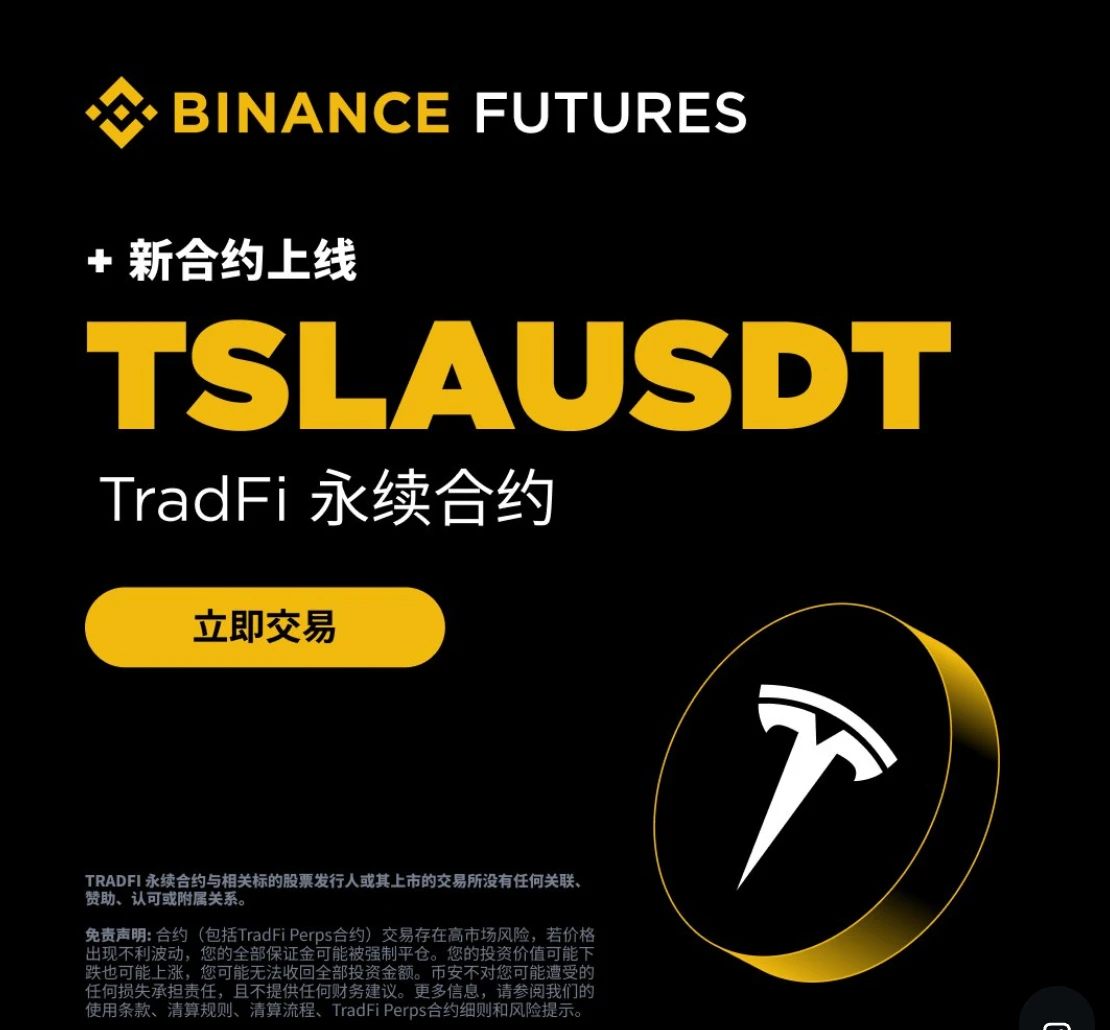
Launching Tesla Contracts, Binance Seizes 'Pricing Power' from Traditional Stock Markets

Binance, the world's largest cryptocurrency exchange, has reignited its foray into traditional finance by launching a Tesla (TSLA) stock perpetual contract, marking a significant escalation in the competition between centralized exchanges (CEX) and traditional stock markets like NASDAQ and NYSE. This move, announced on January 28th, comes five years after Binance discontinued its stock token offerings in 2021 due to regulatory pressures. The relaunch is underpinned by a transformed landscape: a more crypto-friendly US regulatory environment under the Trump administration, the rapid growth of the tokenized stock market (now valued at ~$1.1 billion), and matured infrastructure like stablecoins and oracles following the 2025 GENIUS Act. Binance's strategy appears twofold: first, to tap into the vast pool of global equity investors to overcome its user growth bottleneck, and second, to capture a share of the massive revenue potential from the multi-trillion dollar stock market via its high-volume derivatives products. The article frames this as a "liquidity war," where agile CEXs like Binance, despite their smaller size, challenge traditional exchanges with superior flexibility and product iteration. While the outcome is uncertain and hinges on long-term regulatory fairness, Binance's move signals a bold attempt to seize pricing power and redefine the future of financial trading.

比推32m ago

Launching Tesla Contracts, Binance Seizes 'Pricing Power' from Traditional Stock Markets

比推32m ago

Trading

Spot
Futures
活动图片